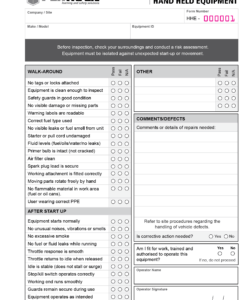
Handheld Petrol Equipment Pre-Start Checklist Books
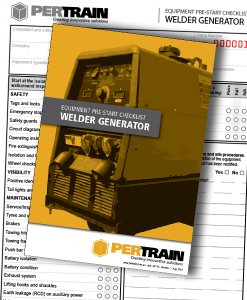
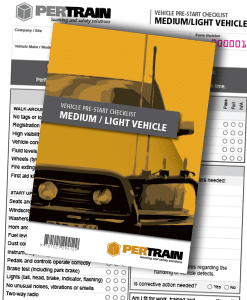
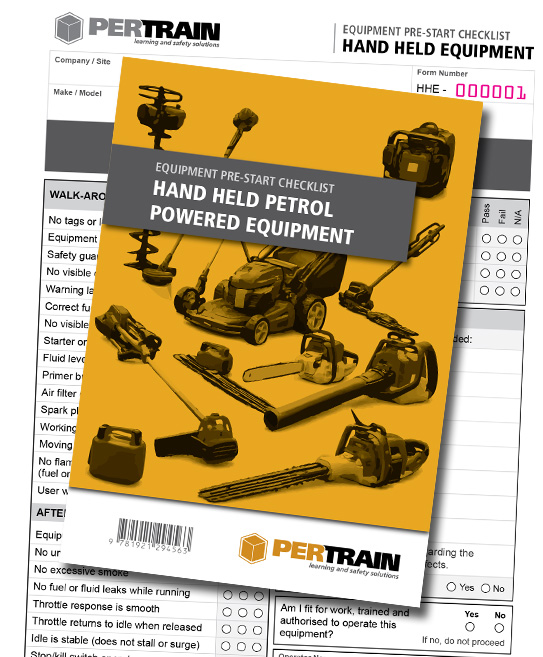
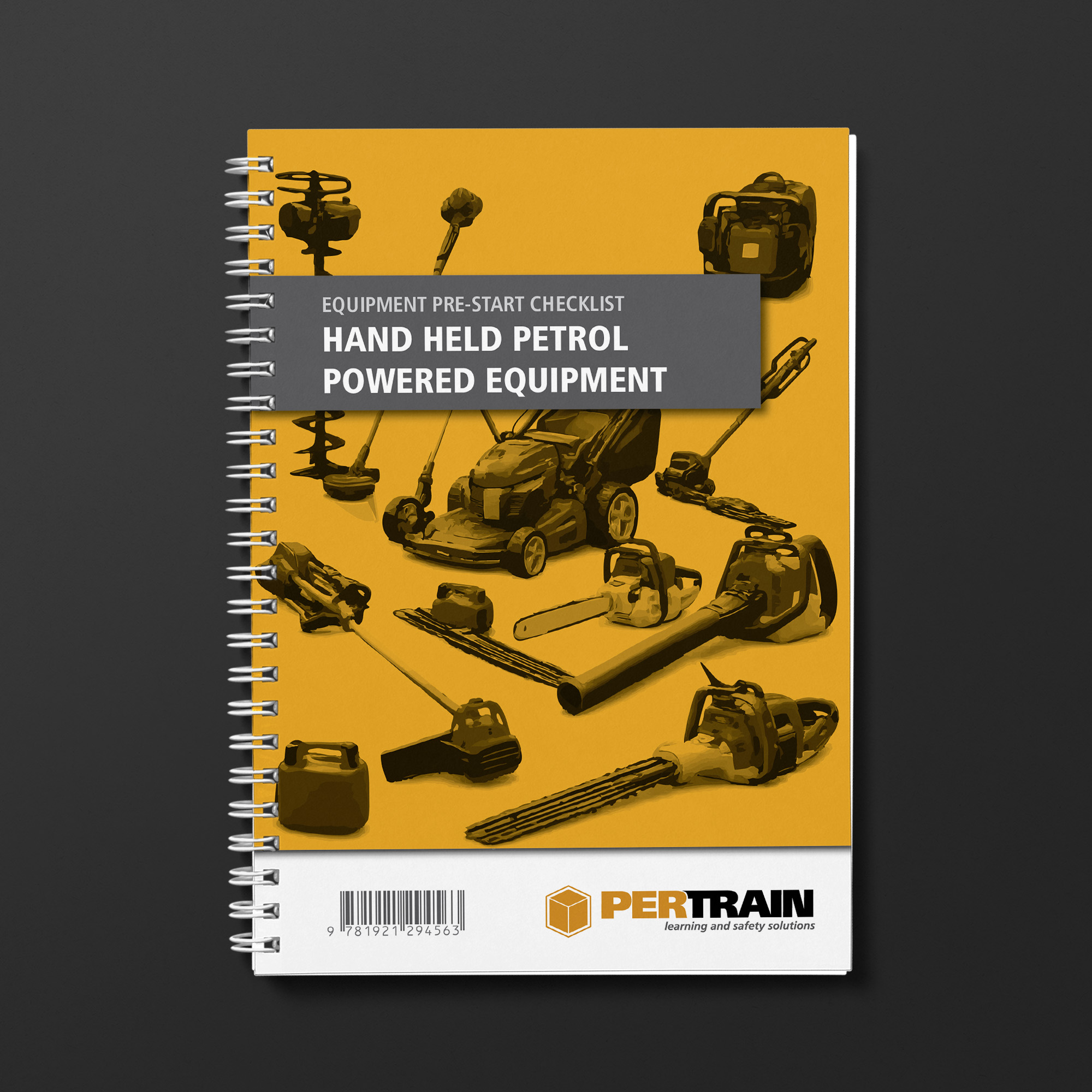
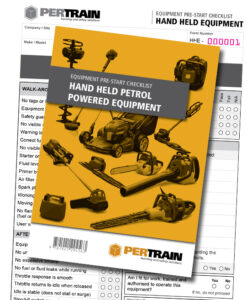
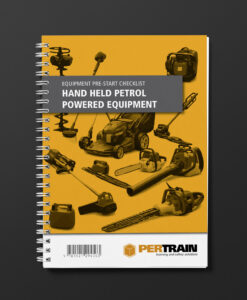
Our Handheld Petrol Equipment Pre-Start Checklist Book is designed by industry professionals to assist machinery owners and operators in meeting their obligations while promoting a safe working environment.
Which Handheld Petrol Equipment this Pre-Start Book is for?
- Chainsaw
- Cut-off saw / demolition saw (petrol quick cut / road saw)
- Concrete saw (handheld petrol)
- Pole saw (petrol)
- Brush cutter / whipper snipper
- Line trimmer
- Clearing saw
- Petrol edger
- Petrol hedge trimmer
- Pole hedge trimmer
- Handheld leaf blower (petrol)
- Vacuum / blower mulcher (petrol)
- Petrol auger / earth drill (1-person auger)
- Petrol post hole borer
- Petrol rock drill (jackhammer style – if petrol driven)
- Petrol plate compactor (small walk-behind units)
- Petrol jumping jack / rammer (some models)
- Petrol-powered rescue saw (forced entry saw)
- Petrol-powered hydraulic power pack (portable unit – if used to run rescue tools)
Purpose of a Handheld Petrol Equipment Pre-Start Book
- Identifies potential mechanical or safety issues before operation.
- Ensures compliance with workplace health and safety (WHS) regulations.
- Helps maintain a preventative maintenance schedule.
- Provides a record of inspections for auditing and compliance.
What’s Included in a Handheld Petrol Equipment Pre-Start Book?
-
Plant & Equipment Details:
- Equipment type.
- Make, model, and serial number.
- Fleet/plant ID and location.
-
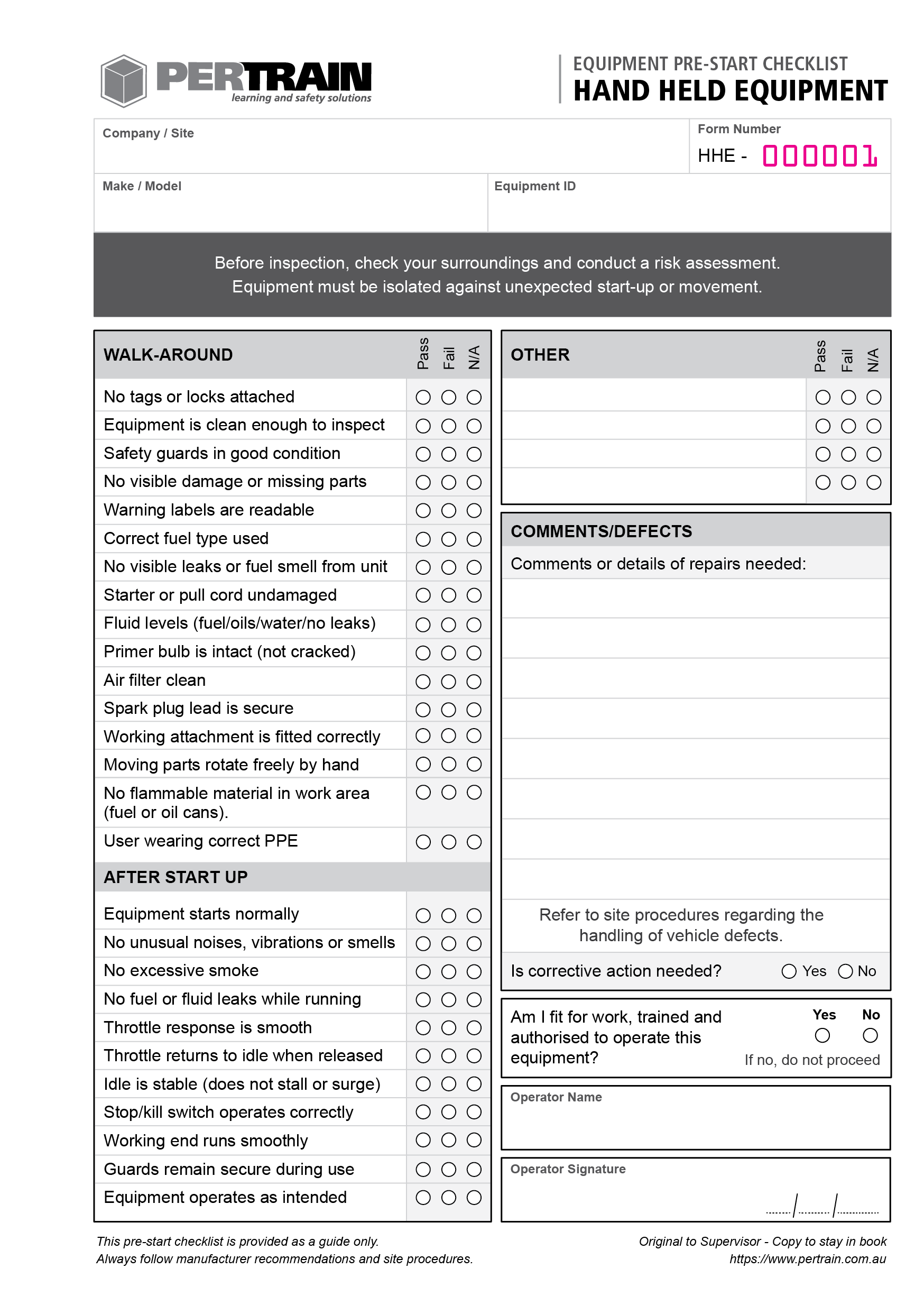
Prestart Inspection Checklist:
- Fluids & Fuel Levels: Engine oil, coolant, fuel, hydraulic fluid.
- Engine & Starting System: Pull start operation, choke function, smooth starting and idling.
- Safety Controls & Switches: Stop/kill switch working, throttle trigger returns correctly, trigger lockout working (if fitted).
- Guards & Safety Features: All guards fitted and secure (blade/chain guards, deflectors), chain brake working (chainsaws only).
- Cutting/Working Components: Chain/blade/cutting head secure, sharp and serviceable, correct tension (if applicable), no excessive wear.
- Air & Exhaust System: Air filter clean and fitted, muffler secure, no excessive smoke/noise, spark arrestor fitted (if required).
- General Condition: No cracks, loose bolts, missing parts, or visible damage, handles/grips secure.
- Fire Safety Requirements: No fuel leaks, safe refuelling practices followed, fire extinguisher available if required by site.
- Site-Specific Requirements: Safety decals and warning labels readable, tagging/current inspection status (if used), PPE confirmed.
-
Defect Reporting Section:
- Space for operators to record any faults or issues.
- Supervisor acknowledgment and actions taken.
-
Maintenance Log:
- Record of completed repairs or servicing.
-
Operator Sign-Off:
- Confirmation that the prestart has been completed.
- Acknowledgment of any defects found.
Who Uses a Handheld Petrol Equipment Pre-Start Book?
- Operators – Complete daily prestart inspections before operating.
- Supervisors & Safety Officers – Review logs for compliance.
- Maintenance Teams – Use records to schedule servicing and repairs.
Why is it Important?
- Ensures equipment is safe for operation.
- Helps prevent mechanical failures and reduces downtime.
- Assists in compliance with site regulations and WHS laws.
- Provides a record of inspections for audits and incident investigations.
Equipment Owners have a legal requirement to provide equipment that’s fit–for–purpose and safe to use.
Equipment Operators have an obligation to ensure equipment is safe to use before using it.
For larger orders we offer full customisation (Add a logo, change colours or alter the checksheets). Call us for a price.